A More Effective Approach to Those Suffering from Pilonidal Disease
Pilonidal disease, a chronic infectious and inflammatory disease of the skin and underlying tissue near the tailbone, is a common disorder where sinus tracts or abscesses form due to trapped hair and debris. It typically affects people in their teens, 20s, and 30s. The disease rarely resolves without surgery, and in its most severe form, can be very debilitating and interfere with activities of daily living.
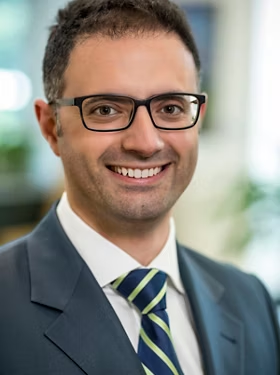
Samuil Rafailov, DO FACS
Dr. Samuil Rafailov, board-certified in general surgery and cosmetic surgery, brings his expertise in treating patients with the disease to Hackettstown and Newton Medical Centers. Dr. Rafailov specializes in the cleft lift procedure (also called Bascom flap), a surgical technique with a very low complication rate that gets patients back to work and school within a week or less.
Dr. Rafailov explained that pilonidal disease is poorly understood, and many surgeons fail to appreciate that the deep cleft is the cause of the disease. “Surgeons often remove too much skin and deep tissue and leave large defects that further deepen the cleft. Conventional surgery can create large, disfiguring wounds that require labor-intensive and long-lasting postoperative care. Unfortunately, these sub-optimal surgeries have become the so-called ‘standard of care’.”
“Many sufferers of pilonidal disease become discouraged in their search for curative treatments as they are offered disfiguring procedures with high recurrence rates,” explains Dr. Rafailov. “Our practice performs the greatest number of these procedures in the northeast part of the U.S. (10-15 per month), and our results are consistent. We are devoted to providing the best possible advice and treatment to our patients and educating the medical community about the cleft lift procedure.”
Cleft lift surgery reduces the depth of the natal cleft valley so that it remains well aerated, dry, and shallow, and hairs and debris can’t be trapped. During surgery, Dr. Rafailov makes an incision to remove the affected tissue, including the cyst and sinus tracts. The gluteal cleft is lifted and flattened. By creating a shallower cleft, he eliminates the conditions that allow hair fragments and debris to become trapped.
Benefits of the procedures include:
- Low recurrence rates: The recurrence rate for pilonidal disease following cleft lift surgery is less than 5%, significantly lower than traditional procedures.
- Faster recovery: Patients can typically return to normal activities within 1 to 2 weeks, a much shorter recovery period than other methods.
- Low maintenance: There are no open wounds, packing or dressings to care for.
- Improved quality of life: By eliminating the deep gluteal cleft, the procedure reduces the chance of reinfection and future sinus tracts.
“As of now, cleft lift surgery is the gold standard in the treatment of pilonidal wounds, especially in recurrent and complex cases,” he added.
If your patients are struggling with recurring pilonidal cysts or failed previous treatments, Dr. Rafailov would be pleased to discuss the cleft lift procedure.
You can call or text Dr Rafailov at 973-323-2400.
About Samuil Rafailov, DO FACS
Dr. Rafailov earned his undergraduate degree from Brooklyn College. He completed his medical degree at New York College of Osteopathic Medicine, and postgraduate training in general surgery at Flushing Hospital Medical Center in Queens, NY. After successfully completing his surgical training, Dr. Rafailov sought additional training in cosmetic surgery through an accredited fellowship in Spokane, WA. He is an active member of the American College of Surgery, American College of Osteopathic Surgeons, American Academy of Cosmetic Surgery and American Osteopathic Association.